Key Takeaways
- Comparing shrink film vs stretch film largely comes down to how each material stabilises a load.
- Stretch film generally provides more controllable containment for pallet loads and can help connect the products to the pallet.
- Shrink film provides closer enclosure but requires heat, making product sensitivity an important consideration.
Introduction
Shrink film and stretch film can both protect goods during storage and transport, but they stabilise pallet loads differently. Stretch film relies on tension and elastic recovery to hold products together, while shrink film uses heat to contract around the load.
The better choice depends on the pallet configuration, product sensitivity, transport conditions, required enclosure, operating costs, and available equipment. Comparing shrink film vs stretch film helps businesses choose packaging that provides suitable load stability while reducing the risk of product damage during transport.
Understanding the Fundamental Distinction: Tension vs Heat Sealing
The main difference between the two materials is how they are applied and create restraint around a load. This affects how each film responds to movement, pressure, and changes in load shape during handling and transport.
How Stretch Film Uses Elastic Recovery
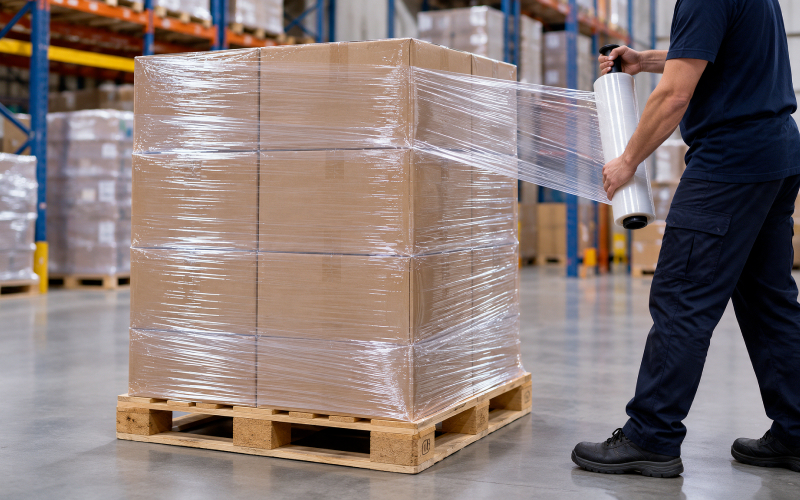
Stretch film is pulled around a pallet under controlled film tension. As the material attempts to return towards its original form, it creates containment force that holds cartons together and helps stabilise them during handling.
How Shrink Film Uses Heat
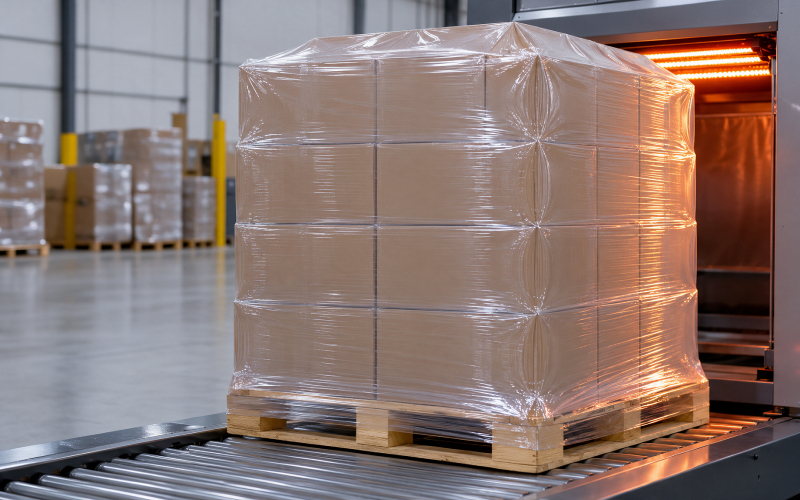
Shrink film is placed around the products and exposed to controlled heat. The material contracts and conforms around the load, creating a close enclosure.
How Material Properties Affect Performance
Thickness, elongation, recovery, shrink response, and puncture resistance can all influence performance. It is important to ensure film specifications match the load’s weight, shape, edges, and sensitivity.
How Shrink Film and Stretch Film Affect Pallet Load Stability
Load stability is a key consideration when comparing shrink film vs stretch film, especially for goods that pass through several handling and transport stages. How each film holds the load affects how well products stay in position during movement, stacking, and delivery.
Containment and Pallet Anchoring
Stretch film generally provides stronger and more controllable containment because it is applied under tension. During stretch wrapping, the lower layers can also connect the cartons to the pallet, helping reduce movement across the pallet deck.
Shrink film tightens through heat instead. Although it can closely enclose the products, the final restraint depends on even contraction and the stability of the underlying stack.
Uniform and Irregular Loads
Uniform carton loads generally provide consistent surfaces for stretch film. They also allow containment force to be distributed more evenly.
Shrink film can conform closely around irregular products, although uneven contraction may create loose areas or additional pressure around certain sections. Edge protection, strapping, or changes to the stacking pattern may still be required for challenging loads.
Repeated Handling and Transport
Pallets may pass through forklifts, pallet trucks, conveyors, trucks, and several warehouse locations before reaching their destination. Overlapping stretch-film layers can continue providing some containment if one area is damaged.
Damage to shrink film may more severely affect the surrounding enclosure. Neither material, however, can correct poor pallet packaging caused by weak cartons, excessive overhang, gaps, or uneven weight distribution.
Matching Film to Singapore’s Climate and Logistics Conditions
Singapore’s high humidity, warm climate, and frequent movement between warehouses, vehicles, and air-conditioned spaces can introduce additional packaging considerations. These conditions can affect moisture exposure, condensation, and film performance during storage and transport.
Moisture and Condensation
Shrink film provides closer protection against dust and external moisture, but it may trap condensation when temperatures change. Meanwhile, stretch film offers less complete coverage, so moisture-sensitive loads may need additional protection such as top sheets or ventilation.
Heat-Sensitive Products
Shrink film requires heat during application, which may affect temperature-sensitive products, labels, adhesives, cartons, or plastic components. Where heat exposure is a concern, stretch film offers an alternative because it can secure the load without thermal application.
Long-Distance and Regional Transport
Regional shipments may face repeated handling, temperature and humidity changes, compression, and transport vibration. Stretch film can provide consistent containment across these conditions, while shrink film offers closer enclosure when additional protection is needed.
How to Choose Between Shrink Film vs Stretch Film
Choosing between the two films depends on how the pallet will be stored, handled, and transported. Stretch film is generally better suited to loads that need consistent containment and frequent handling. Shrink film, on the other hand, may be more appropriate for loads that require closer enclosure or conformity, where the products can safely tolerate heat.
Important considerations include:
- Load height, weight, and shape
- Carton strength and stacking pattern
- Heat and compression sensitivity
- Moisture and ventilation requirements
- Packaging volume and throughput
- Equipment, energy, labour, and maintenance costs
These factors also influence whether manual or automated pallet wrapping best meets the required throughput.
What Common Film Application Problems Reduce Pallet Stability
Film performance depends not only on the material selected but also on how it is applied to the pallet. Application issues can reduce load stability and affect how well products remain secured during storage, handling, and transport.
Incorrect Tension or Heat
Stretch film needs the right tension to maintain load stability. Too little can allow products to loosen, while too much may deform weaker cartons or compress sensitive goods. Shrink film has a similar balance with heat. Insufficient heat can leave loose sections, while excessive or uneven heating may create holes, weak areas, or unwanted pressure.
Film Breakage Around Corners
Sharp carton edges, protruding products, pallet overhang, exposed nails, and damaged boards can puncture either film. If breakage happens repeatedly, the film specification or application settings may not suit the load. Edge protectors and proper pallet alignment can provide additional protection in these vulnerable areas.
Poor Load-to-Pallet Anchoring
A tightly wrapped load can still shift if it is not properly secured to the pallet. Stretch film can create a stronger connection through lower wraps around the pallet and bottom cartons, while shrink film should enclose the load in a way that supports the complete palletised unit, not just the products.
Choosing the Film Around the Load
The shrink film vs stretch film comparison has no single answer for every operation. Stretch film generally offers controllable containment and practical pallet anchoring, whereas shrink film can provide closer enclosure where heat exposure is acceptable.
Sunstream Industries provides material handling, warehouse automation, and packaging solutions for different operational requirements. Our experience and equipment capabilities allow us to assess load characteristics, handling conditions, packaging volumes, and operational requirements when identifying suitable solutions.
Contact us today to discuss packaging materials and equipment that can improve pallet stability.
November 11, 2026

 Sunstream Industries